Alberto Robiati
Find out more
Innovation requires not only access to specific technologies and infrastructures, financing and delivery, but it is activated by cultural factors – a mindset – involving the deepest convictions and values of the innovators themselves. This day is intended to explore the «innovative mindset» from two standpoints: 1. the construct of innovation (the sum of anthropological meanings that characterize it) 2. the innovative behavior (the set of behavioral patterns through which the culture of innovation is expressed).
For today’s and tomorrow’s innovators.
Aim of this day is the exploration of the innovation mindset as a sort of «necessary intangible condition» that facilitates the acquisition of know-how, methodologies and contents necessary to implement innovation. It is thus applicable to any organizational framework in which one lives or strives to innovate. The teaching methods are manifold: lectures, case studies, personal cases e classroom research.
Participatory processes in the public sector force us to redefine what the democratic debate means today. Active citizens not only contribute to re-think approaches to government, but also co-produce new ways of conceiving government itself, by introducing, for example, new services where citizens, administrators and other players collaborate in building a more open, resilient and democratic society. This day will be dedicated to understanding this phenomenon, by exploring how the design for social innovation can contribute concretely to regenerate the democratic systems of our cities and territories.
For those who wish to experience co-creation and co-production processes of ecosystemic urban regeneration. For those involved in the design for social innovation, or design of products and services – public sector, third sector, private companies, consultants, planners, early career profiles looking to deepen their knowledge of design for social innovation.
The aim of the day is to offer knowledge on how the design for social innovation can make a concrete contribution towards a more participatory and more democratic society. This day allows to acquiring skills in using the methodologies of design for social innovation, through the co-creative and co-generative dimension of our cities and territories, engaging citizens, administrators and other key local players in a participatory process targeting urban and environmental regeneration.
Description
A journey through the experimental methods used in design for social innovation applied to collaborative city-making, urban participatory design and urban future-making (co-creation of future urban scenarios), targeting the regeneration of the city by engaging citizens, local administrators and other stakeholders in re-thinking the city of the future in a more participatory, resilient, ecosystemic and sustainable manner.
For whom
For those who wish to experience processes of co-creation and co-production of participatory processes of ecosystemic urban regeneration. For those who work in the design for social innovation, or design of products and services – public administrations, third sector, private companies, consultants, planners, early career profiles looking to deepen their knowledge of design for social innovation.
Aims and methods
Objective of this envisioning workshop is to strengthen knowledge about the processes of co-design and co-production of ecosystemic innovation applied to cities. Participants will acquire skills on the methods of design for social innovation, specifically for the participatory regeneration of urban contexts. The teaching methods are manifold: lectures, case studies, group discussions, excercises, real life micro-projects.
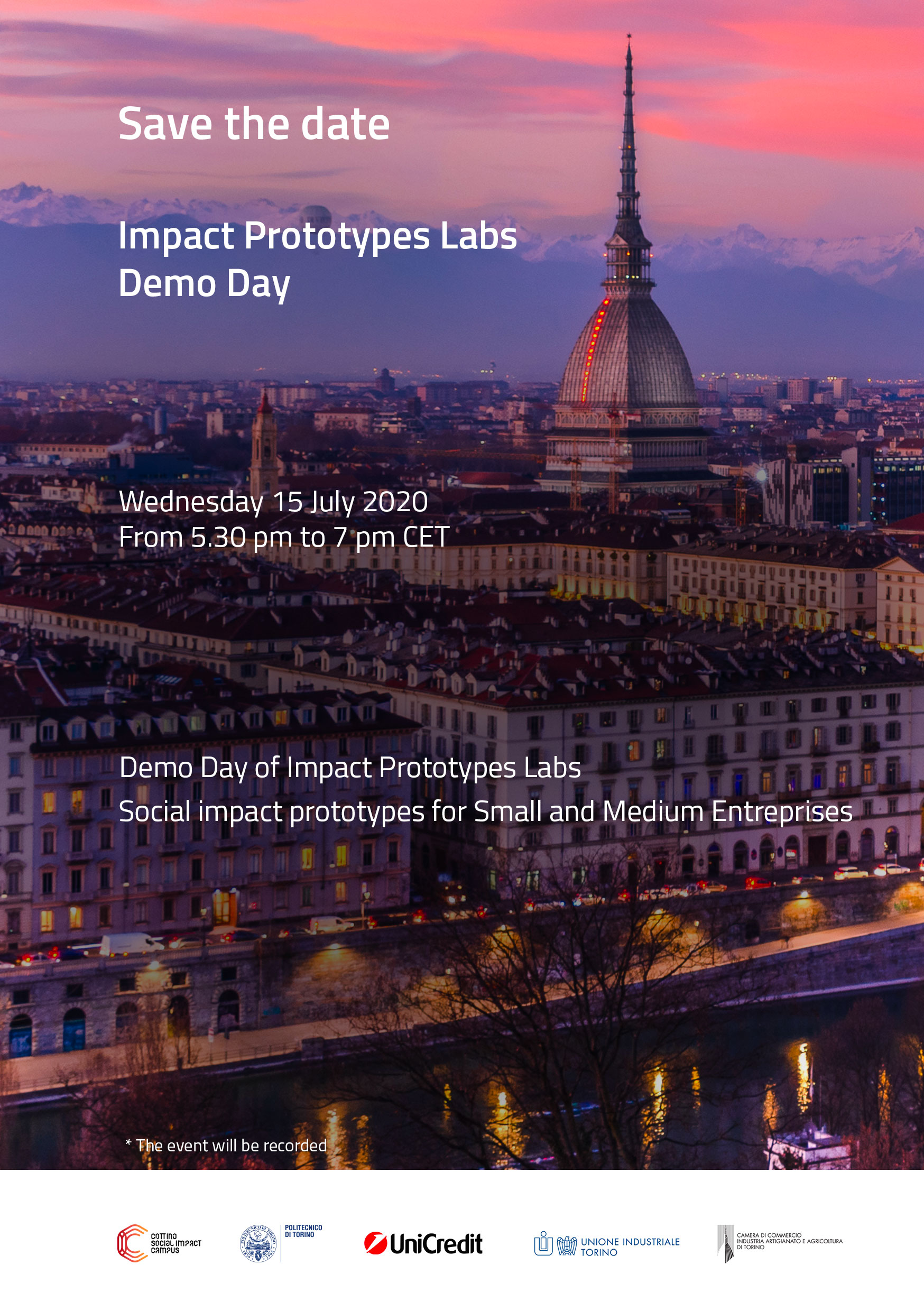
The first pilot project aiming at developing social impact prototypes for Small and Medium Entreprises (SMEs). The programme is held in partnership with Politecnico di Torino, Unicredit, Unione Industriale Torino and the Torino Chamber of Commerce. The SMEs selected will take advantage of a group of MSc students of Politecnico di Torino who will be working for 3 months in supporting the entreprise in developing social impact projects.
For all SMEs who want to share and foster impact strategies throughout their corporate culture.
Aim of this programme is to to think out of the box, prototyping new business models to tackle specific social challenges: to strengthen the relationship with clients, suppliers and all stakeholders, to develop new products or services conducive to new funding channels, to get to be open to impact investing opportunities, to connect business and social impact, to increase the corporate value by re-thinking responsibility (corporate social impact) and to nurture impact management skills.



Description
Generazione Futura 2030 is an innovative educational program conceived with the aim of contributing to the implementation of Goal 4 of the Agenda 2030 for Sustainable Development “Quality Education” – and in particular Target 4.7: “By 2030, ensure that all learners acquire the knowledge and skills needed to promote sustainable development, including, among others, through education for sustainable development and sustainable lifestyles, human rights, gender equality, promotion of a culture of peace and non-violence, global citizenship and appreciation of cultural diversity and of culture’s contribution to sustainable development”.
Main intervention lines:
Partners
The initiative is promoted by Centro Studi Avis Nazionale, City of Vasto High Schools, Avis (Regional, Chieti Province and City of Vasto), Vasto Rotary Club, Pilkington Italia SpA. Cottino Social Imapct Campus is among the Scientific Partners of the program.
Goals and methods
The aim of this initiative is to engaging with the interested parties, by offering them spaces for thinking and acting about and for sustainable development. The teaching methods include: co-design of training tracks, guidance and support for educators and design of educational programs – peer education.
For whom
The pilot project involves at the moment 4 high schools in the city of Vasto, Abruzzo.